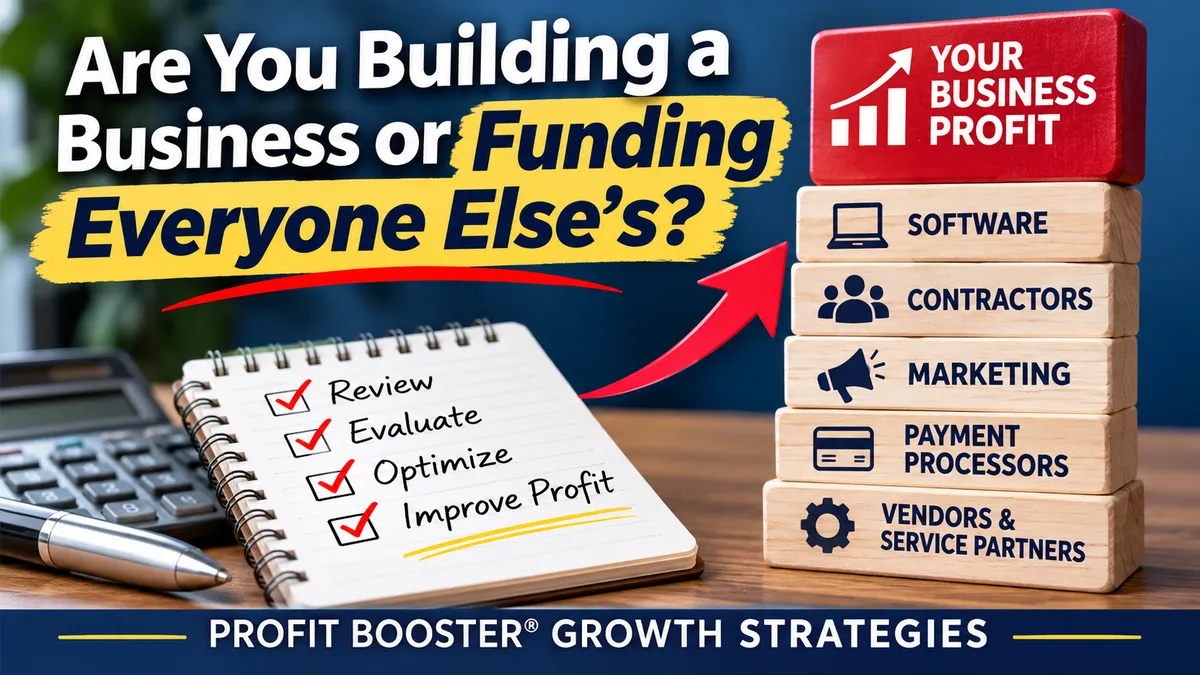
Are You Building a Business or Funding Everyone Else's? | Vendor Cost Management
PROFIT BOOSTER® GROWTH STRATEGIES | NOVEMBER 9, 2026
Are You Building a Business or Funding Everyone Else's?
Your revenue keeps growing. So why does it feel like everyone is making money from your business except you?
By Marcia Riner | Business Growth Strategist
Every month, money flows out of your business to people and companies that help keep it running.
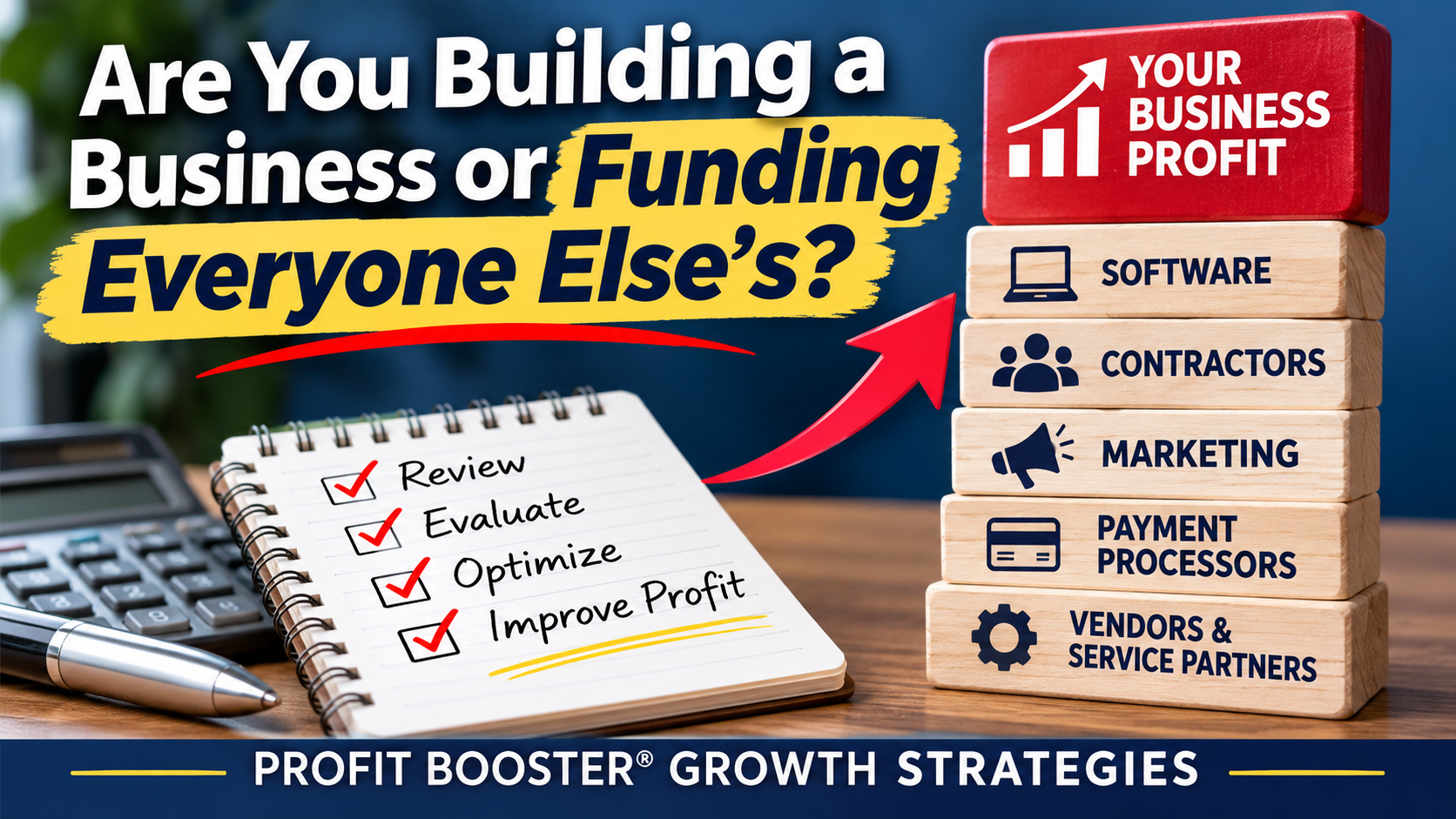
Software subscriptions. Marketing agencies. Contractors. Payment processors. Technology platforms. Consultants. Vendors.
Individually, most of those expenses seem reasonable. After all, you need tools, services, and outside expertise to operate and grow.
But here's a question worth asking: When was the last time you evaluated whether those expenses were still earning their place in your business?
Because it's entirely possible to build a successful company that generates plenty of revenue while quietly funding everyone else's profitability.
And that deserves a closer look.
The Expense That Made Sense Two Years Ago Might Not Make Sense Today
Business expenses have a way of becoming permanent.
You sign up for software to solve a problem. You hire a contractor during a busy season. You bring in an agency to support a marketing campaign.
Then the business changes.
Your team grows. Your processes improve. Your priorities shift. Yet those monthly payments keep rolling along.
Nobody questions them because they're already in the budget.
This is where vendor cost management becomes an important part of profitable business growth.
The question isn't whether you needed the expense when you started paying it. The question is whether it's still creating enough value today.
Your Vendors Should Be Contributing to Your Growth, Not Just Sending Invoices
I'm not suggesting you start canceling every subscription or renegotiating every contract.
Some of your most valuable business relationships are with outside providers.
A great bookkeeper helps you make better financial decisions. A reliable contractor frees up your team. A strong marketing partner helps generate profitable customers.
Those expenses can be worth every dollar.
But others may be delivering far less than you're paying for.
Consider a marketing agency charging $3,000 monthly. That's $36,000 annually.
Are they generating qualified opportunities? Are those opportunities turning into profitable customers? Or are you receiving attractive reports filled with impressions, clicks, and activity that never seem to turn into revenue?
Activity isn't the same as value. And a paid invoice isn't proof of a return.
What Should You Review in a Business Expense Audit?
An effective business expense audit looks beyond the amount you're spending. It examines what your business receives in return.
Start with these five areas:
1.Software and subscriptions: Are you paying for overlapping tools, unused features, or licenses nobody needs anymore?
2.Contractors and outsourced services: Are deliverables consistent, timely, and worth the investment?
3.Marketing and advertising partners: Can you connect their work to qualified leads, sales opportunities, customer retention, or revenue?
4.Payment processing and transaction fees: Have your sales volume and transaction patterns changed enough to justify reviewing your rates?
5.Professional and operational services: Are these relationships helping you operate more efficiently, reduce risk, or make better decisions?
Don't make the mistake of measuring everything strictly by immediate revenue.
Some services create value by protecting your time, reducing costly errors, improving customer experience, or preventing operational problems.
The goal of business expense optimization is to eliminate waste without eliminating what makes your company stronger.
A Small Expense Leak Can Become a Big Profit Problem
Let's put some numbers behind this.
Imagine your business generates $1.5 million in annual revenue.
After reviewing your vendors, subscriptions, and outside service providers, you discover $2,500 per month in unnecessary spending.
Here's what that means:
Annual Business Revenue: $1,500,000
Unnecessary External Spending: $2,500 per month
Total Annual Savings Opportunity: $30,000
Potential Improvement in Net Profit Margin: 2 percentage points
That's an additional $30,000 in annual profit without making another sale, assuming those expenses can be eliminated without creating replacement costs.
Think about what that money could mean for your business.
More working capital. More money available for strategic investments. A stronger financial position. Potentially greater business value when it's time to sell.
Sometimes the fastest way to improve net profit isn't finding another customer.
It's taking a closer look at where the money is already going.
How Do You Reduce Business Expenses Without Hurting Growth?
Here's an exercise I recommend.
Pull your last 90 days of recurring vendor and service expenses. Then ask three questions about each one:
Would I buy this again today?
If you were starting fresh, knowing what you know now, would you make the same investment?
What measurable value is this providing?
Look for revenue generated, hours saved, errors prevented, customer experience improved, or capabilities your business genuinely needs.
Is there a better way to get the same result?
You might renegotiate pricing, consolidate tools, adjust the scope of a contract, or find a more effective provider.
Not every expense needs to disappear. Some simply need to work harder.
And don't overlook the power of asking your current providers for better terms. Long-standing relationships, increased purchasing volume, and changing service requirements can create opportunities to improve your costs without sacrificing quality.
Frequently Asked Questions About Business Expense Optimization
How often should a business review vendor expenses?
Review major vendor relationships quarterly and conduct a complete business expense audit at least annually. This helps identify unnecessary spending before it becomes an ongoing drain on profitability.
What's the difference between cost cutting and expense optimization?
Cost cutting focuses on spending less. Expense optimization focuses on getting better financial and operational results from what you spend. The second approach is generally more sustainable for long-term business growth.
Can reducing vendor expenses really improve net profit?
Yes. When you eliminate unnecessary operating expenses without reducing revenue or creating replacement costs, those savings can flow directly to operating profit and, potentially, net profit.
The Business You're Building Should Be Rewarding You, Too
You take the risks. You manage the people. You serve the customers. You carry the responsibility for keeping the business moving forward.
Your vendors and partners should help make that effort more profitable, not quietly consume the rewards.
The next time you review your financials, don't just look at how much money came in.
Look at how much went out, who received it, and what your business got in return.
Because profitable business growth isn't just about earning more. It's about keeping more of what you've worked so hard to build.
Ready to See Where Your Business Could Be More Profitable?
You don't always need a bigger sales target to create a stronger business. Sometimes you need a better understanding of what's helping your growth and what's quietly eating into your profit.
The Profit Booster® Growth Map helps you identify where your business has opportunities to improve revenue, profitability, and operational performance so you can focus your efforts where they'll make the biggest difference.
Find out where your next profit opportunity may be hiding.
Get Your Profit Booster® Growth Map
About the Author

Marcia Riner is a Business Growth Strategist and CEO of Infinite Profit®, where she helps established business owners increase revenue, improve profitability, and build companies that operate more efficiently and independently.
With over 25 years of experience, Marcia serves as a Growth Implementation Partner, helping business owners move beyond strategy into execution. Through her Profit Booster® frameworks and Growth Agency, she helps businesses identify growth opportunities, install effective systems, improve financial performance, and build long-term enterprise value.
Marcia is also the host of Profit With A Plan, a weekly podcast featuring practical business growth strategies and conversations with industry experts.
Connect with Marcia on social media @marciariner, listen to the podcast at ProfitWithAPlan.com, and explore more business growth insights at Infinite-Profit.com.